The question deserves a rigorous answer, not a slogan. Our team has synthesized two decades of peer-reviewed toxicology, regulatory leaching tests, and fire experiments into a comprehensive scientific review. Here's what the evidence says.
The health hazards of "cadmium" come from bioavailable forms — fumes, oxide dusts, and soluble salts that release Cd²⁺ ions into the body. Cadmium telluride is the opposite end of the spectrum: a stable compound with a strong covalent bond and a solubility so low (Ksp ≈ 10⁻³⁵) that it essentially refuses to dissolve. Think of table salt: sodium is explosive and chlorine is poisonous, yet sodium chloride sits on every dinner table. The compound is not its ingredients.
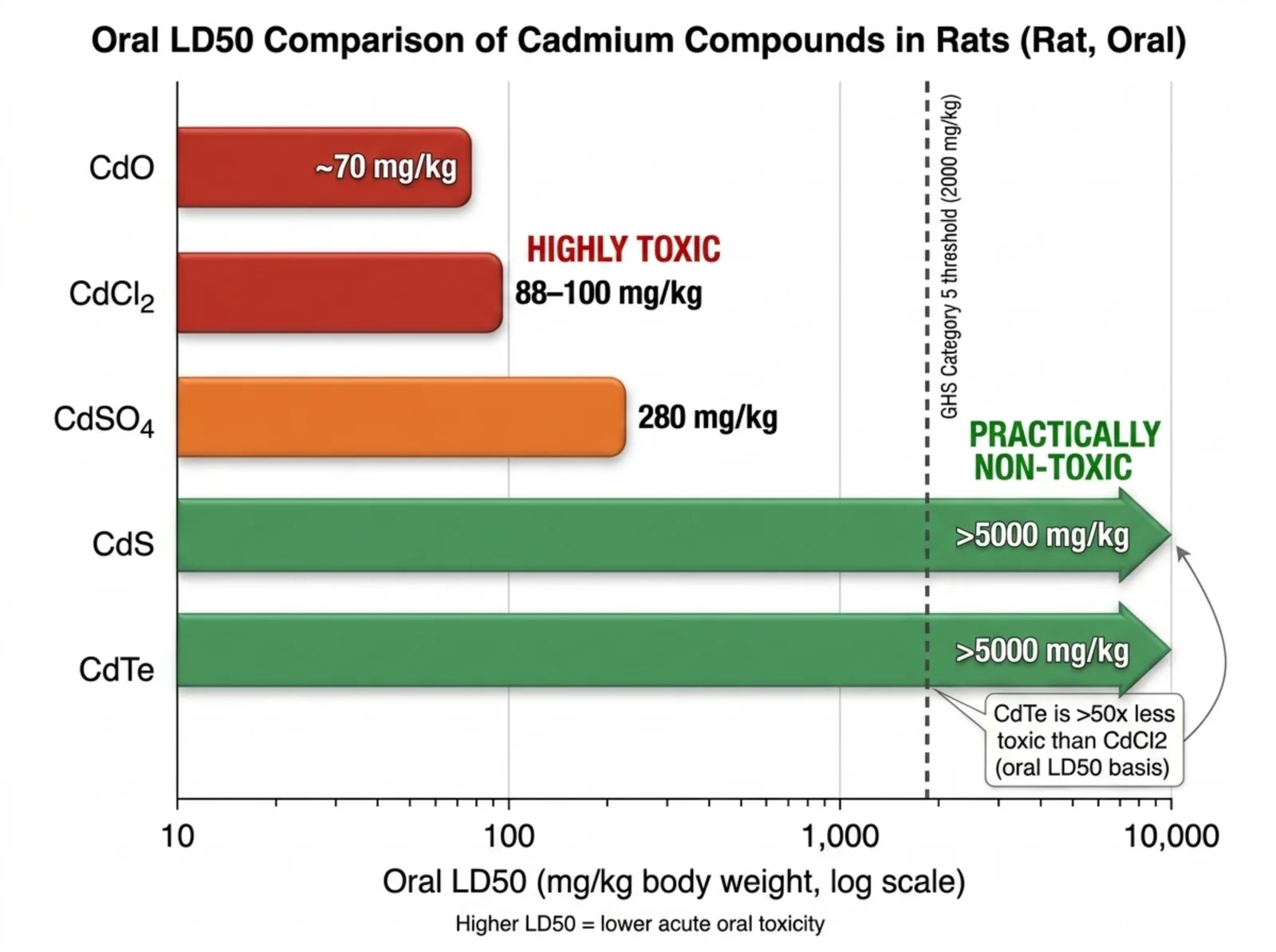
In standardized oral toxicity testing in rats, CdTe required more than 5,000 mg/kg to reach LD₅₀ — the "practically non-toxic" category — while soluble cadmium chloride is lethal at 88–100 mg/kg. That is a >50-fold difference in acute toxicity, and reference-dose comparisons put chronic toxicity roughly 1,000-fold apart.
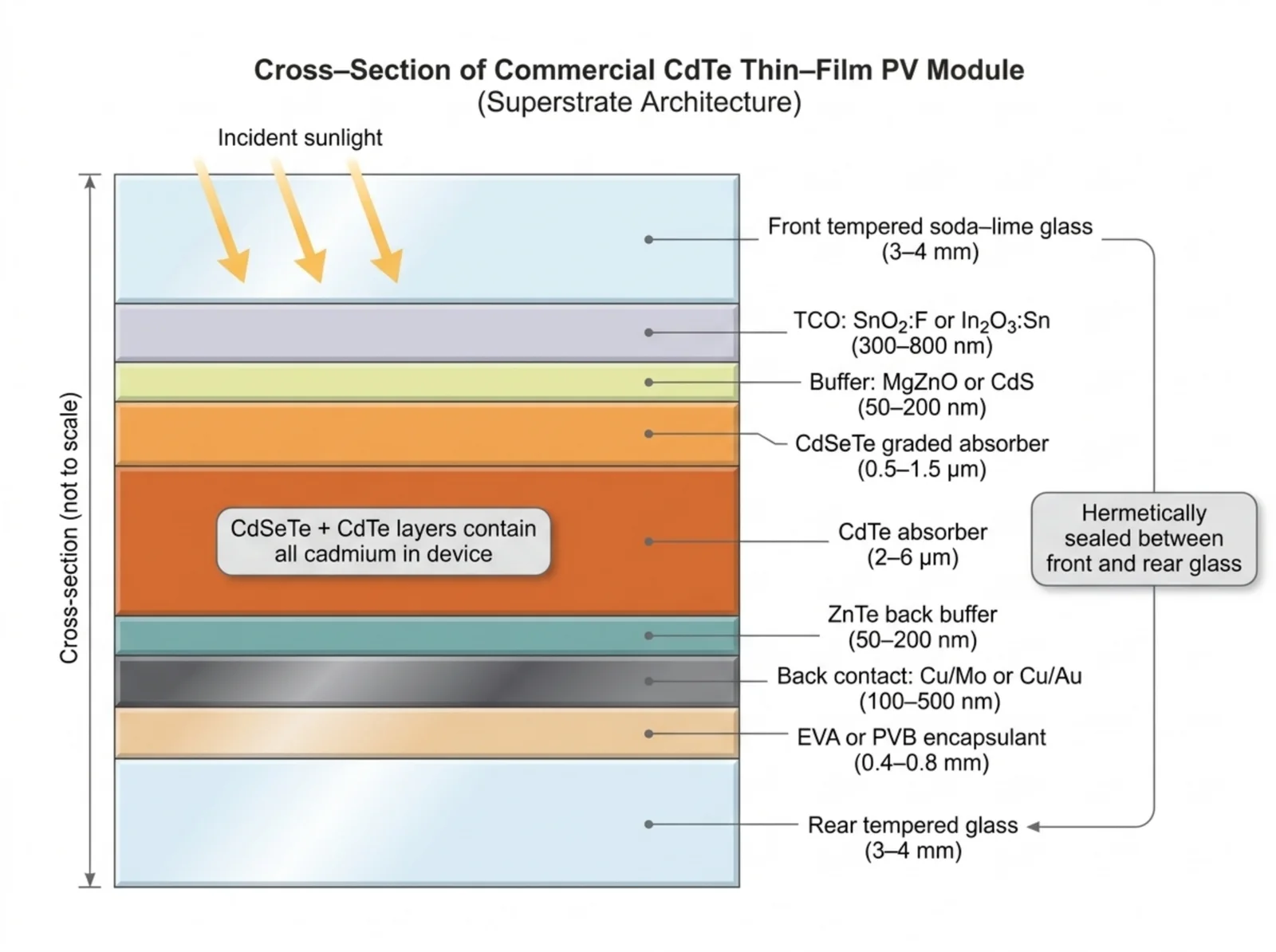
In a commercial module, the CdTe layer is a film just a few micrometers thick — a standard residential-size module contains only 8–16 grams of cadmium, less than 0.1% of the module's weight — hermetically sealed between two sheets of tempered glass with an industrial encapsulant.
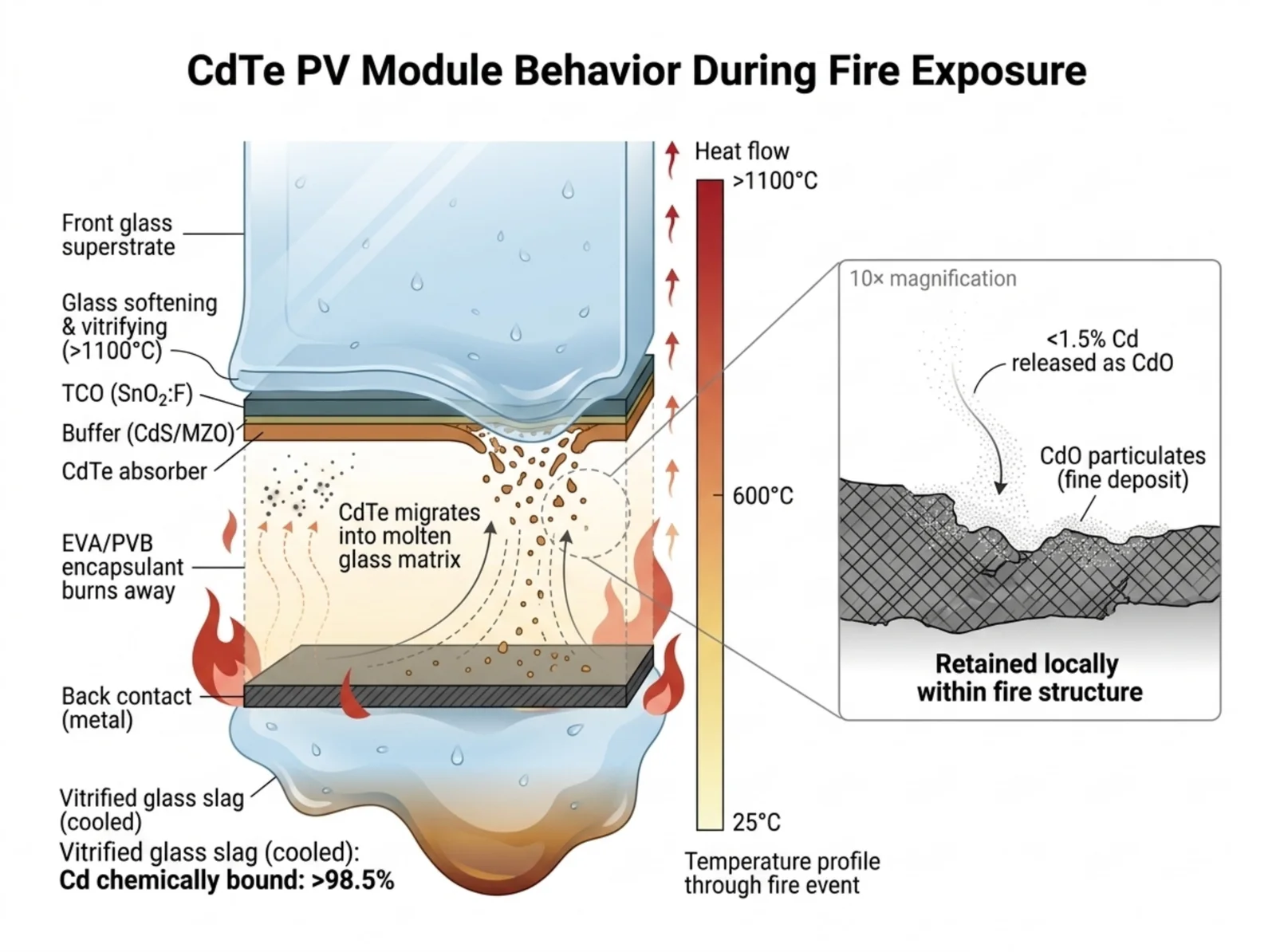
Researchers subjected commercial CdTe modules to temperatures above 1,100 °C — hotter than a typical building fire. More than 98.5% of the cadmium stayed chemically bound in the melted, re-solidified glass. The CdTe doesn't escape; it migrates into the molten glass and vitrifies.
Cadmium is produced whether we like it or not — it's an unavoidable byproduct of zinc refining. Left unused, it ends up in tailings or the atmosphere. Locking it into stable, encapsulated, recyclable solar modules is one of the most responsible things civilization can do with it. Lifecycle assessments show CdTe photovoltaics reduce net cadmium emissions per unit of electricity by 100–300× compared to coal-fired power, which releases bioavailable cadmium directly into the air we breathe.
For residential applications — including solar roof tiles like Helioslate™ — the picture is straightforward: the active layer is thinner than a human hair, sealed in glass, chemically stable even if a tile cracks, safe for the family below it and the firefighters above it, and recyclable at end of life. Decades of deployment across millions of panels support exactly this conclusion.
This page summarizes a comprehensive scientific review of CdTe photovoltaic safety prepared by our team (Savargaonkar & Munshi, in preparation), synthesizing peer-reviewed toxicological studies, EPA regulatory test data, fire safety experiments, and lifecycle assessments. Sources available on request.